Smart Water-Saving Irrigation System for Open Field Agriculture
The PKYDrip smart water supply platform offers a modular approach to irrigation in both on-grid and off-grid environments. With a flexible choice of modules, features can be added through simple upgrades over time, while cloud-based monitoring and components designed for robust performance and minimal maintenance make it ideal for remote agricultural operations.
The platform is suitable for a wide range of open field irrigation applications and can be adapted to a variety of water sources, including boreholes, tanks, rivers, wells and reservoirs.
Rather than being limited to a specific farm size, the system architecture is designed to scale through additional valve zones, pump capacity and wireless modules. This allows installations to grow gradually as irrigation requirements expand.
The flexible platform can be powered from the grid or via integrated solar panels on many modules, with hybrid capability built into the system for ease of operation.
A choice of modules enables either drip irrigation or sprinkler irrigation solutions, depending on project requirements, while the system can be expanded easily after installation when required.
Standard System Architecture
The modular design ensures that each installation is tailored to specific farm requirements. However, a standard irrigation system typically includes the following core components.
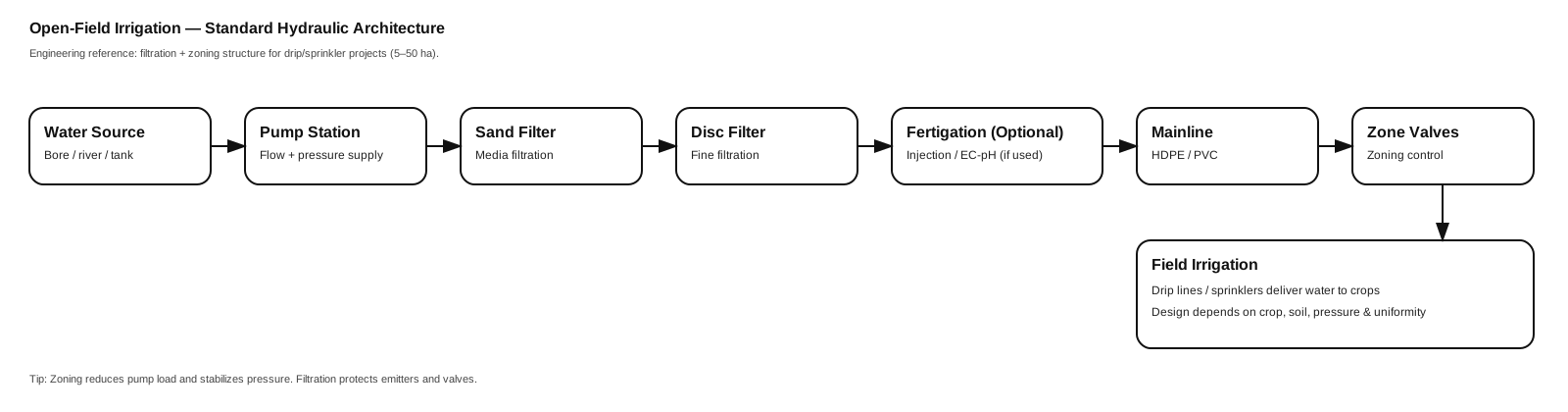
Typical Irrigation Layout
A typical open-field irrigation system using PKYDrip modules may follow this layout:
- Water Source
- Pump Station
- Sand Filter
- Disc Filter
- Fertigation Unit (Optional)
- Mainline Pipeline
- Zone Valves
- Field Irrigation
This modular architecture allows irrigation systems to expand easily as farm operations grow.
Water Source
The system can operate with both local and remote water sources, depending on the irrigation project design.
Typical water sources include:
- Boreholes
- Surface water
- Storage tanks
- Irrigation reservoirs
Water source flexibility allows the system to adapt easily to different farm environments and water supply conditions.
Pump Station
The PKYDrip LoRa Solar Pump Controller integrates solar support with remote pump start and stop for convenient operation.
Key capabilities include:
- Remote pump start and stop
- Pump status verification using flow feedback
- Integrated pump protection logic
This allows pump systems to operate reliably even in locations where 4G or WiFi connectivity may not be available.
Sand Filter
Clean water is essential for reliable irrigation and nutrient delivery.
Pump systems are therefore typically fitted with sand media filters, which remove larger particles and organic matter before water enters the irrigation network.
This helps maintain system performance and extends the lifespan of downstream components.
Disc Filter
A disc filtration system provides highly efficient removal of suspended solids and smaller particles.
Disc filters are commonly used to remove:
- fine sediment
- organic debris
- microplastics
- other contaminants
Many installations use automatic back-flush filtration systems to ensure reliable long-term operation with minimal maintenance.
Fertigation Unit (Optional)
PKYDrip fertigation controllers provide accurate nutrient dosing and remote management of fertilization processes.
Typical models include:
- PKY-FG301
- PKY-FG401-ECPH
These fertigation units integrate seamlessly into the irrigation system and allow full remote control of the fertigation process.
👉 See more:
PKYDrip Fertigation Systems
Mainline
The mainline distribution pipes transport water from the pump station to the irrigation zones.
The PKYDrip system supports pipeline configurations suitable for both surface installation and underground trenching, depending on project requirements.
Pipe diameter and layout are selected based on:
- total system flow rate
- irrigation zone design
- pump capacity and pressure requirements
Zone Valves
Zone valves regulate water flow into each irrigation zone, allowing accurate control of water delivery across the field.
By dividing the farm into multiple irrigation zones, the system can deliver water more efficiently while maintaining stable pressure and pump performance.
Field Irrigation
The final irrigation pipework delivers water directly to crops.
Depending on crop type and planting structure, irrigation methods may include:
- drip irrigation systems
- sprinkler irrigation systems
This modular approach allows the irrigation method to be selected based on crop requirements and farm layout.
Control Architecture
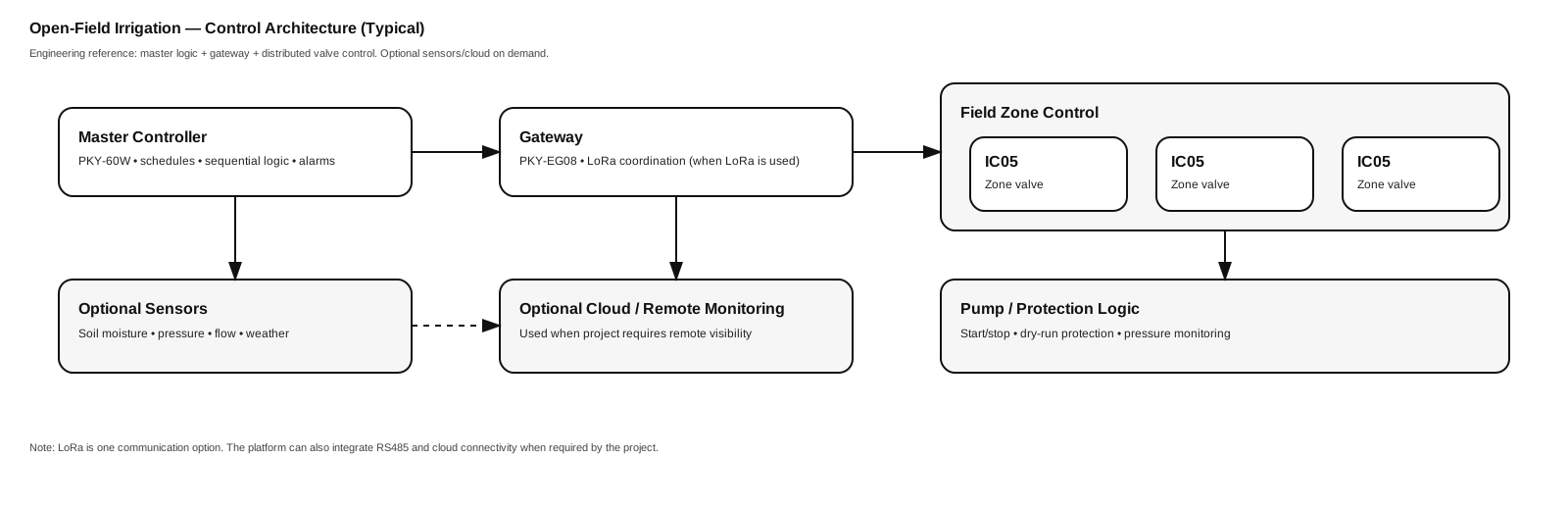
To ensure efficient and reliable operation, the PKYDrip platform uses a modular control architecture.
Depending on the project environment, communication can be implemented using LoRa, RS485 (Modbus), 4G/WiFi, or a hybrid combination. This allows pump controllers, valve controllers, sensors and gateways to work together as one unified automation network for reliable remote irrigation control.
Three main control modules are used within the system.
Master Controller — PKY-60W
The PKY-60W master controller acts as the central logic unit for the irrigation system.
It connects with pump controllers, valve controllers and gateways to define irrigation parameters, either through scheduled programs or sensor inputs.
Key capabilities include:
- multi-zone irrigation scheduling
- automatic irrigation programs
- sensor-triggered irrigation
- integration with fertigation controllers
👉 Product details:
PKY-60W
Gateway Controller — PKY-EG08
The PKY-EG08 gateway controller acts as the communication hub within the irrigation control network.
Depending on the project configuration, communication between controllers, sensors and field devices may use LoRa, RS485 (Modbus), 4G, WiFi, or a hybrid combination.
The gateway coordinates communication between system components, including:
- master controllers
- valve controllers
- sensors
- other field devices
This architecture allows the irrigation system to adapt to different farm environments and communication requirements.
Valve Controllers — IC05 Series
PKY-IC05 valve controllers automate irrigation zone control.
Designed for outdoor operation and minimal maintenance, they can be powered using:
- external power supply
- integrated solar power
- hybrid power configurations
PK-IC05 Plus models are available with additional sensor integration for real-time monitoring of soil and environmental conditions.
Automation Logic
Reliable irrigation automation is critical for consistent crop performance.
The PKYDrip platform supports multiple irrigation control strategies.
Farm Irrigation Planning Guide
When designing an open-field irrigation system, several factors influence system sizing and architecture.
| Farm Area | Typical Flow | Typical Zones |
|---|---|---|
| 10–20 ha | 20–40 m³/h | 6–12 |
| 20–50 ha | 40–80 m³/h | 12–24 |
| 50–100 ha | 80–150 m³/h | 24+ |
Actual configurations depend on:
- crop water demand
- irrigation method (drip or sprinkler)
- pipeline design
- pump pressure and flow
Sequential Irrigation
Water is delivered sequentially across irrigation zones to maintain stable pressure and reduce pump load.
Scheduled Irrigation
Pre-programmed irrigation schedules allow automated irrigation according to crop requirements.
Sensor-Based Irrigation
When soil moisture sensors are installed, irrigation can be triggered automatically based on soil conditions.
The system also integrates:
- pump protection
- pressure monitoring
- cloud monitoring
Remote monitoring via the cloud allows operators to adjust parameters quickly and diagnose issues without frequent site visits.
Example Configuration
The modular architecture allows irrigation systems to be adapted to a wide range of farm sizes and layouts.
Typical system parameters may include:
| Parameter | Example |
|---|---|
| Flow requirement | 20–60 m³/h |
| Pump size | 5–15 kW |
| Irrigation zones | 6–24 zones |
| Solar integration | optional |
Larger farms can expand the system by increasing:
- pump capacity
- number of irrigation zones
- number of wireless valve controllers
Why LoRa for Agriculture
LoRa communication technology is often used in agricultural irrigation systems where long-distance, low-power communication is required.
Typical advantages include:
- low power consumption for solar-powered field devices
- reliable communication in large outdoor environments
- flexible deployment without the need for long communication cables
Actual communication distance is not fixed and depends on terrain, antenna height, obstacles and interference conditions. For larger farms or more complex environments, the network can be extended using repeaters, optimized antenna placement, or alternative communication methods such as RS485 (Modbus), 4G, or WiFi, depending on project requirements.
For remote or large-scale projects, see our wireless irrigation system 👉 See more: lora wireless irrigation control
Application Regions
The PKYDrip irrigation platform is designed to operate in diverse agricultural environments and climate conditions.
Typical regions include:
- Middle East
- Australia
- Africa
- Southeast Asia
These regions often require irrigation systems capable of operating reliably in remote areas and challenging environmental conditions.
Request a System Suggestion
If you are planning an irrigation project or upgrading an existing system, our engineering team can help estimate a suitable system configuration.
Please provide the following information:
- Farm size
- Water source
- Pump power (if known)
- Irrigation type (drip or sprinkler)
Contact us for technical drawings, system design support, or integration advice.