Wireless Irrigation System
Use LoRa wireless field control to expand irrigation automation without long-distance signal cable trenching in orchards, open fields, and retrofit projects.
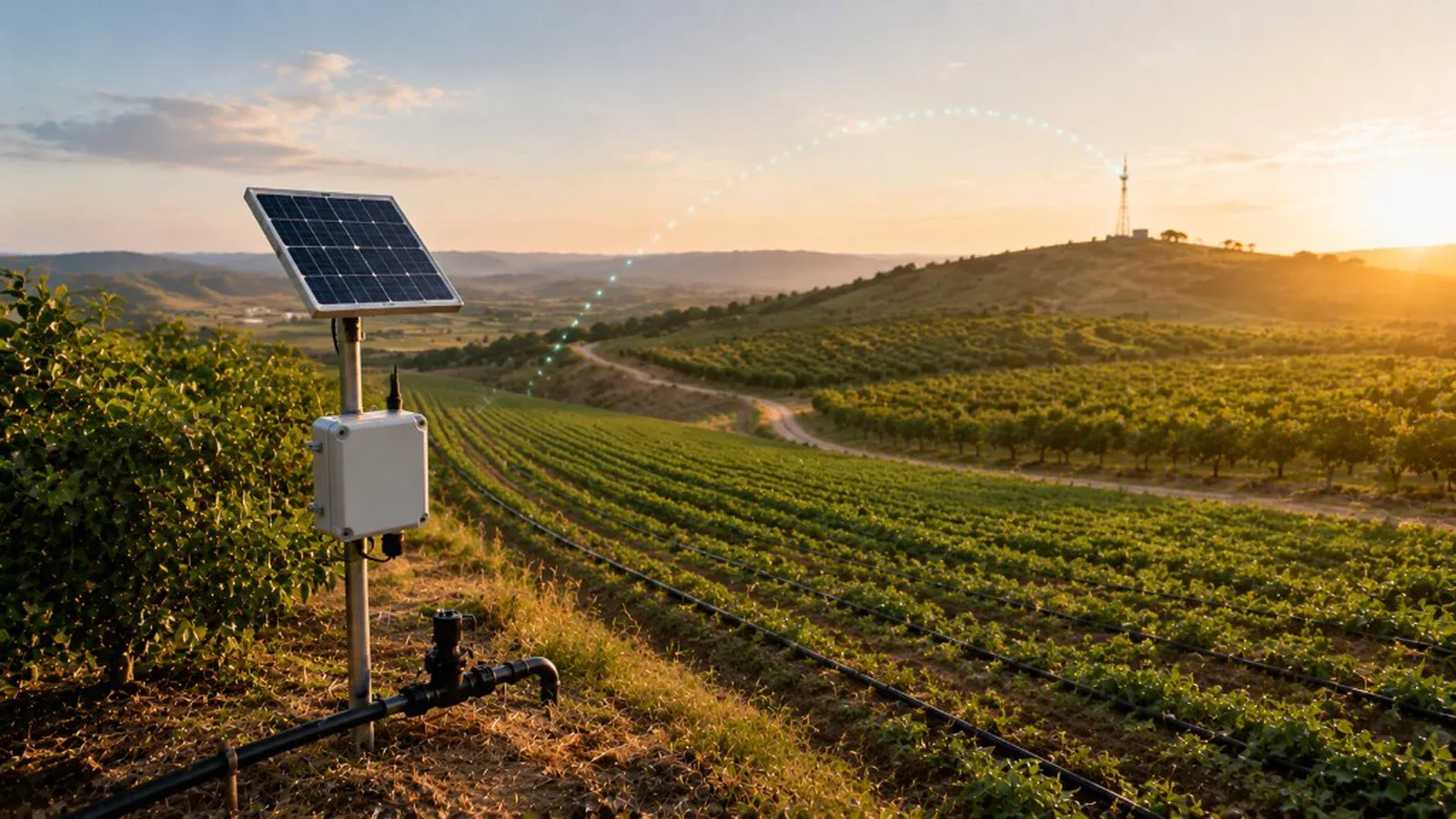
Why Wireless Irrigation Is Used
Long-distance signal cable trenching can be expensive or impractical in orchards, open fields, hillsides, and retrofit projects. Wireless control allows remote valves and field nodes to join the irrigation system with less wiring work.
- Reduce long-distance signal cable runs
- Support retrofit and expansion projects
- Connect remote field zones to central irrigation logic
Solar-Powered Field Controllers
Wireless field controllers can be powered by solar modules where grid power is not available at valve points. This is useful for large farms and distributed valve networks.
- Solar-powered valve nodes
- LoRa communication back to gateway
- Local valve operation with central coordination
Remote Pump and Valve Control
Wireless architecture can include valve nodes, sensor nodes, and pump control modules. The final design depends on distance, terrain, power availability, and irrigation logic.
- Remote valve open/close
- Pump control or pump permission logic
- Sensor feedback from field points
Typical System Structure
Wireless irrigation uses a main controller and gateway to communicate with field valve controllers and sensor nodes across remote irrigation blocks.
Related Products and Modules
Standard 8/16/32-point remote irrigation packages built from existing LoRa modules.
View module →Wireless irrigation architecture is useful when the field layout is larger than the wiring budget or the existing farm needs phased expansion. It complements central irrigation control and can support fertigation or monitoring modules through the same project structure.
PKYDrip Core Systems
Available in:
Regional markets